Craft
AI
Organisation
Ocado & Freelance
Never-Ending Learning
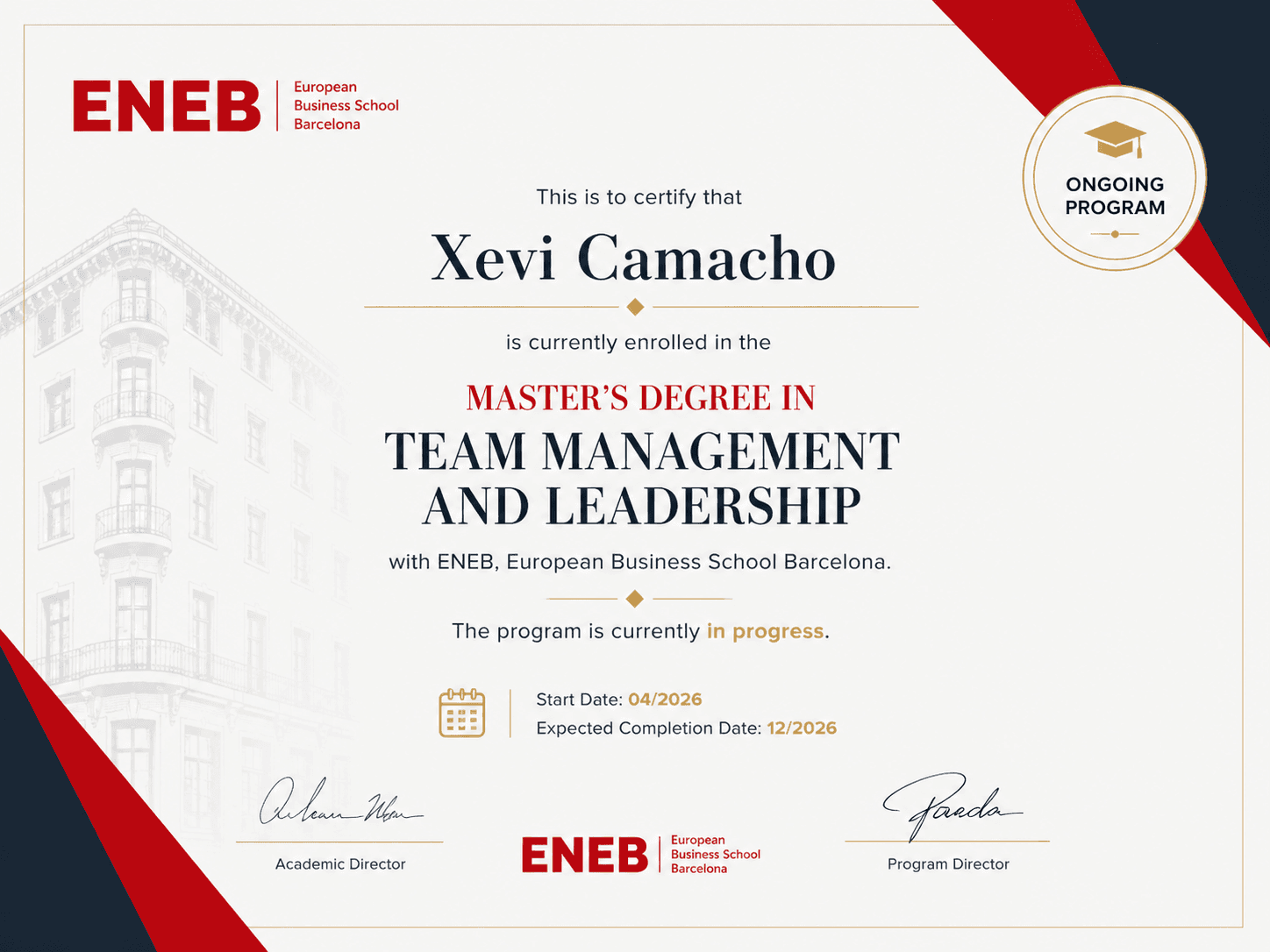
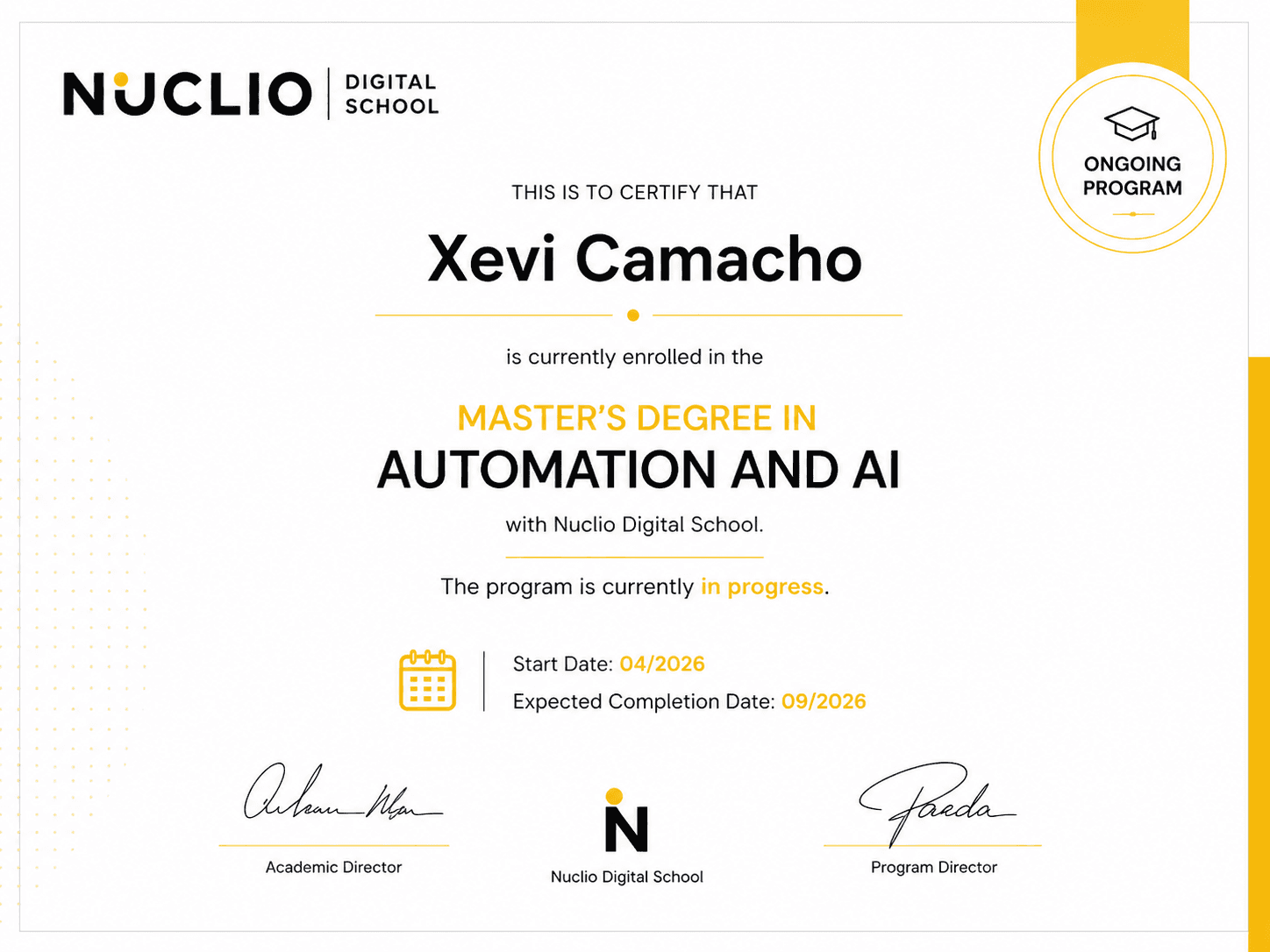
I’m currently pursuing two Master’s degrees in parallel: one at ENEB Business School focused on Team Management and Leadership, and another at Nuclio Digital School specialising in Automation and AI.
While the topics differ, both programs share a strong focus on AI and its practical application. At ENEB, I’m exploring how AI can enhance leadership, decision-making, and team performance. At Nuclio, I’m working hands-on with tools like Make and n8n to identify and automate real-world processes.
This journey reflects my belief that learning should be continuous and applied. I’ll be sharing progress, experiments, and insights from both programs as I move forward.
From AI geek to Entrepreneurship
My journey with AI started long before I approached it professionally. As a lifelong tech enthusiast and early adopter, I’ve always been drawn to systems that react, adapt, and learn from human behaviour, from gaming to intelligent interfaces.
Through a UX lens, AI represents an opportunity to design more contextual, personalised, and meaningful experiences. At the same time, I’m mindful that technology should bring people closer, not push them apart. That’s why I co-founded Happy Humans LTD, exploring how AI and learning systems can address real human needs in thoughtful, responsible ways.
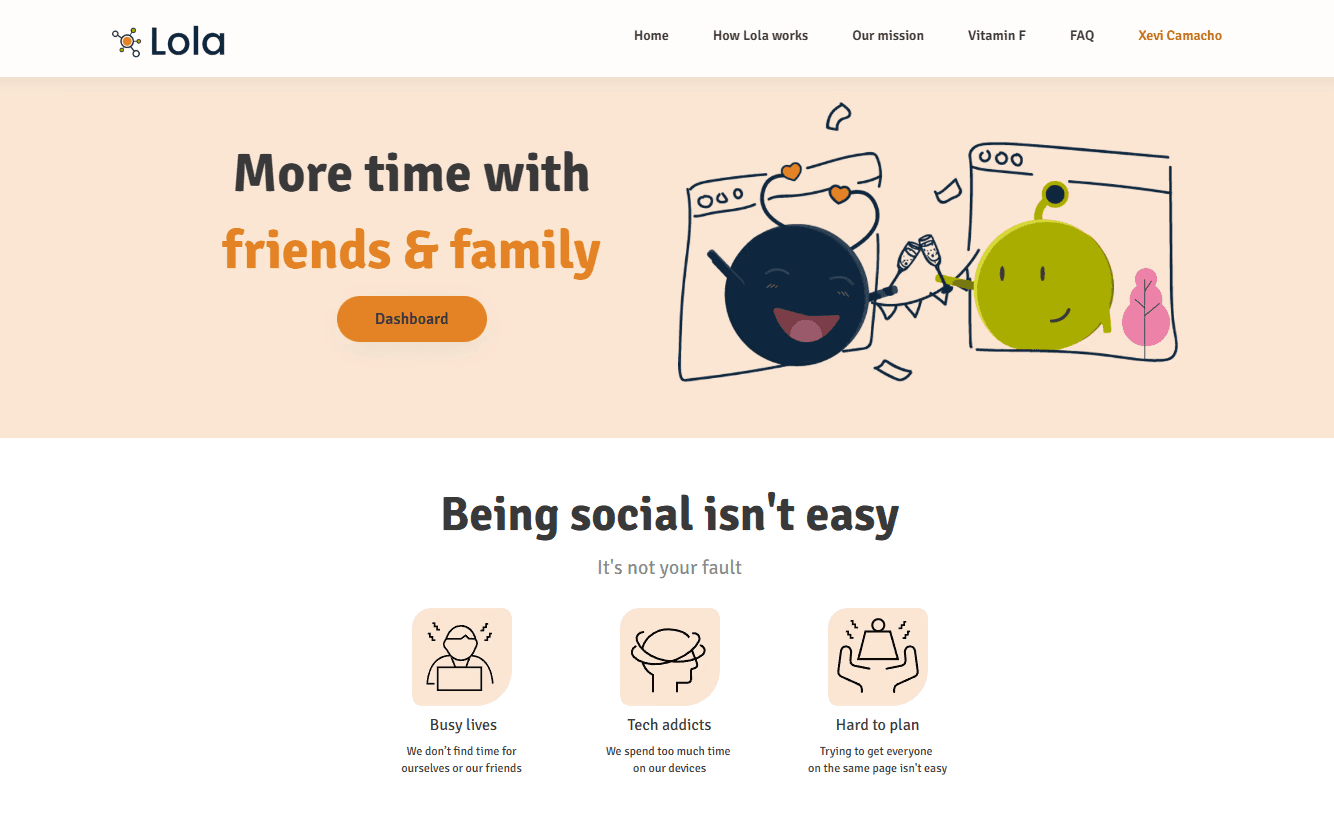
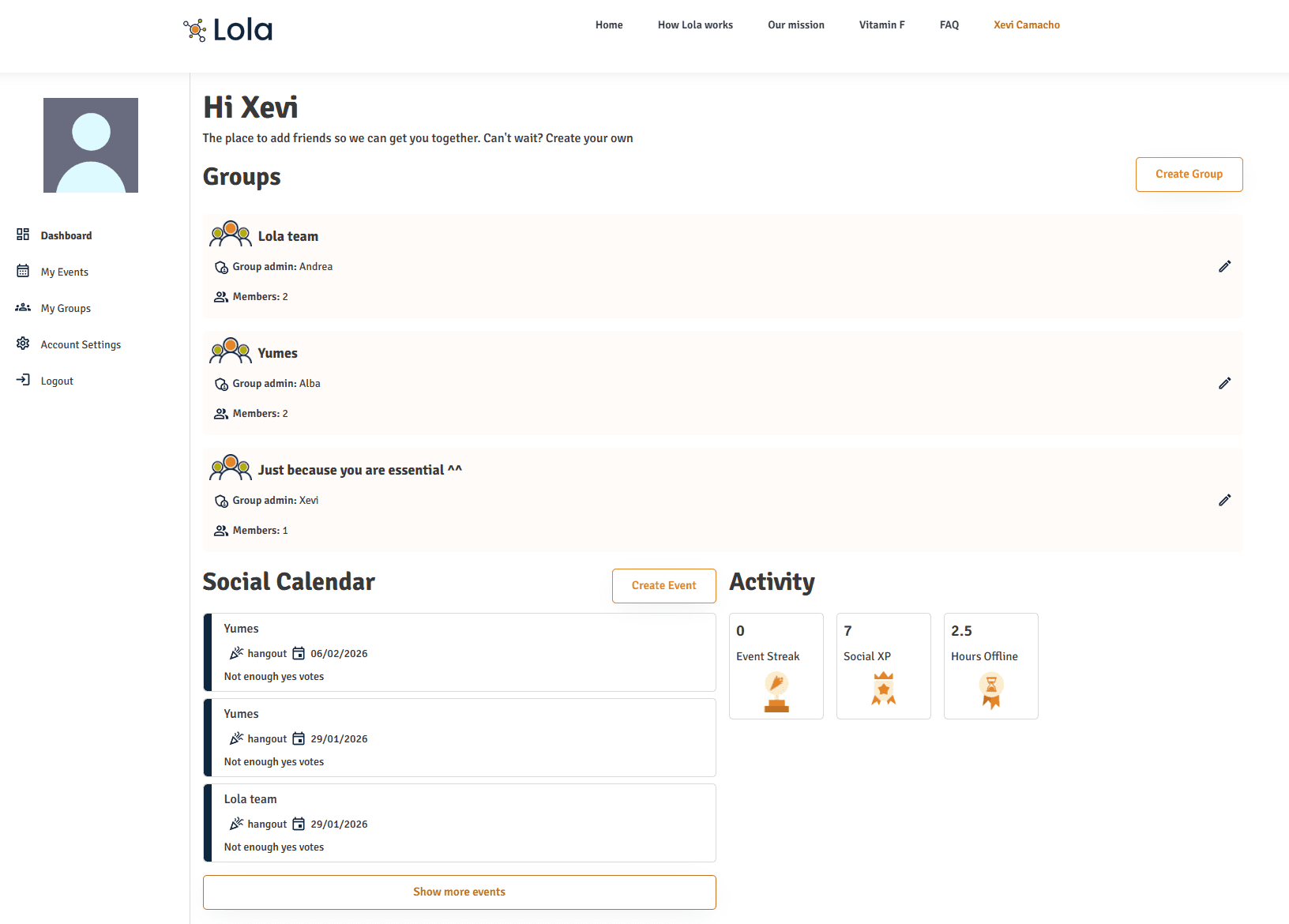
This Journey started late 2024, so it's one year and a half with this beautiful adventure, I’ve been working on a personal project called Lola, where I act as CCO and Co-Founder, but also I'm the person behind the Front-end, content creation, Graphic design and Marketing approach. Our goal is to use technology for good by helping people connect and plan activities outdoors.
In a world that feels increasingly disconnected (despite having more tools than ever to stay close) Lola was born to bring people together in a more meaningful way.
By using advanced algorithms, AI and curated personal preferences, we suggest activities based on a personalised profile, helping people plan experiences and create memories with the people they care about.
On a personal level, this project pushed me to learn and work with Bubble.io (a platform I hadn’t used before). It gave me hands-on experience connecting front-end experiences with backend data, managing user preferences, handling live updates, and understanding how systems behave in real time.
And last but definitely not least, in an era of synthetic testing and apps validated by virtual users, Lola was tested with real people, real conversations, and real feedback.
Where AI Meets UX Practice
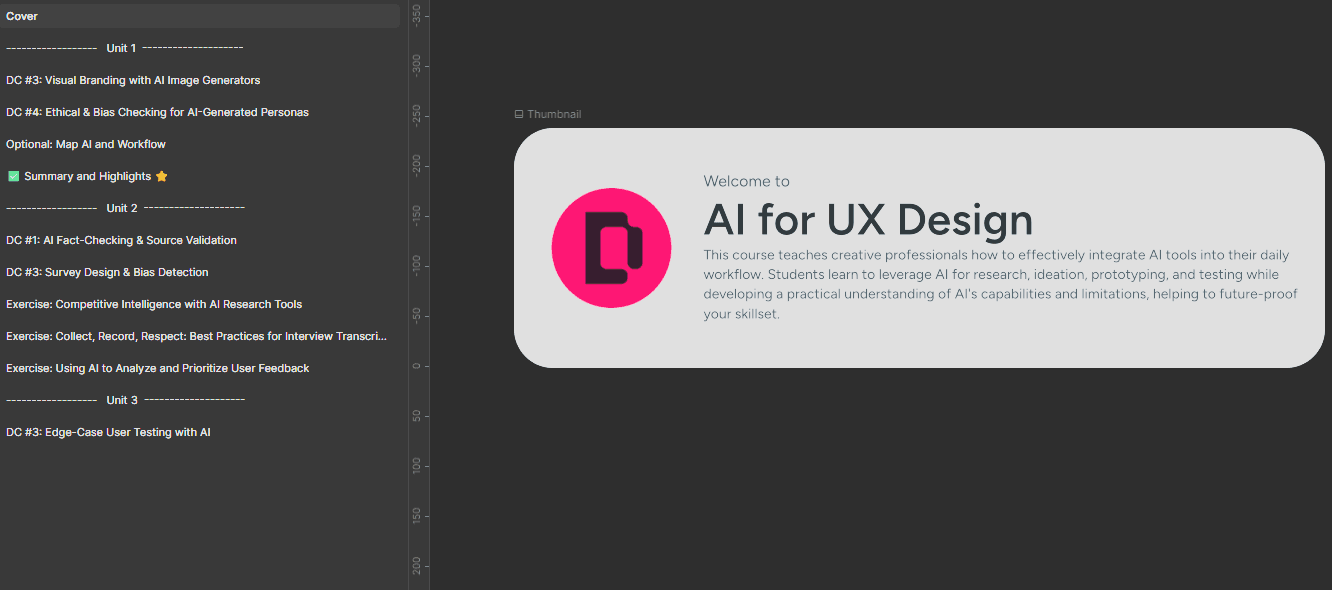
In late 2025, I completed a Designlab course focused on AI in design. Over four intensive weeks (40+ hours), we explored AI bias, persona creation, prompt refinement, fact-checking, and (most importantly) how to integrate these tools meaningfully into the daily UX workflow.
By the end of the course, all those concepts came together into a clear, practical understanding of how AI can smoothly support ecommerce design. Not as a shortcut, but as an accelerator for research, synthesis, and iteration.
One example of how we apply this today: we use tools like Perplexity to gather structured information on a specific topic. Once the data is fact-checked, ChatGPT helps identify patterns, cluster themes, and surface potential pain points or opportunity areas. From there, LLMs can assist with lightweight market benchmarking to understand competitor positioning before moving into user validation.
User feedback can then be filtered and synthesised again using AI to detect recurring friction points, and that’s when the actual design process begins, informed and focused.
On the visual side, I personally draw inspiration from image generation tools like Midjourney. However, in my role at Ocado Technology, where brand consistency is critical, we rely more on tools like Figma Make to accelerate ideation. Prompting quick visual directions doesn’t replace craft, but it speeds up conversations with product and increases our iteration capacity.
There’s much more to explore in this space (pages and pages, in fact) but as a small preview, I’ve included a fitness app concept featuring an evolving avatar that grows with the user’s journey. It was created by applying the frameworks and learnings from the Designlab course end to end.
Sharing is caring
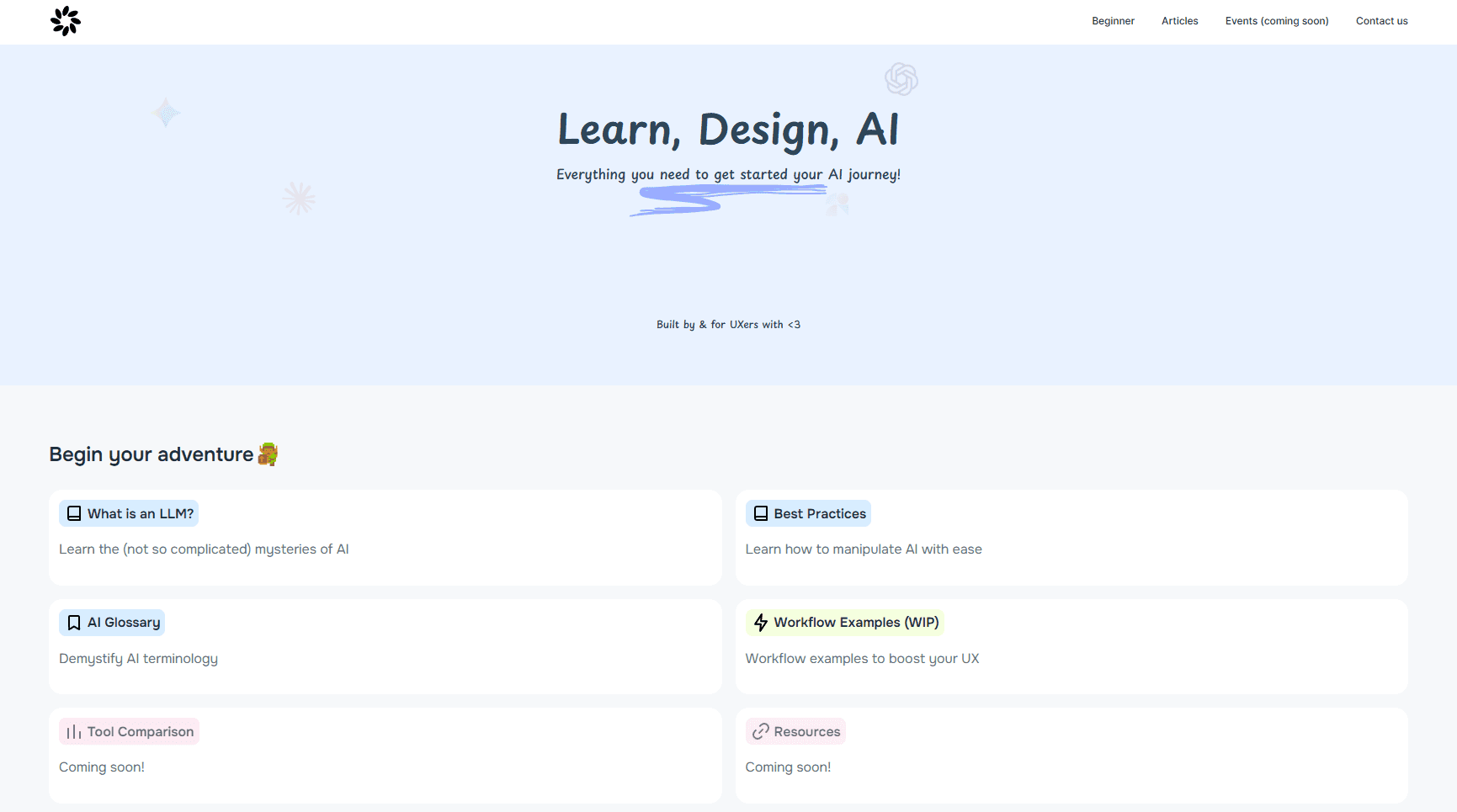
At Ocado Technology, I’m the founder and owner of the AI Forum, an initiative I created to give AI a dedicated space within our organisation. Together with two members of my team, I manage the Slack channel and maintain a work-in-progress website where we curate the latest AI trends, tools, and insights relevant to our craft.
I also hosted internal AI workshops to help teams understand both the opportunities and the responsibilities that come with these technologies. I’m very aware of the impact AI will have on UX, and I see it as part of my role to guide thoughtful adoption rather than passive consumption.
As the host of this forum and platform, staying up to date with emerging tools, research, and debates isn’t optional, it’s a responsibility. My goal is to create a space where curiosity, critical thinking, and practical experimentation can coexist.
And yes, the AI site itself was built using AI tools (mainly Figma Make). It felt only fair to let the machines do some of the heavy lifting while we talk about them every day. If we’re hosting an AI forum and not using AI to build it… what are we even doing?
At some point it became a slightly meta experience, using AI to build a site about AI so people can learn how to use AI better. Very “Inception,” just with more prompts and fewer explosions.
Entering the Agentic Era
One area I’ve been especially curious about is the practical implementation of AI agents and how to manage them in a meaningful, structured way.
Due to intellectual property constraints, most of my experimentation with agents happens in personal projects and within Lola, primarily using tools like n8n. Through this process, I’ve learned a lot about orchestration, automation logic, and the limitations of current dashboards and visual tools. One of the things that I've noticed during this process is, while agents are becoming more powerful, the need of visual dashboards and visual representation feels obsolete.
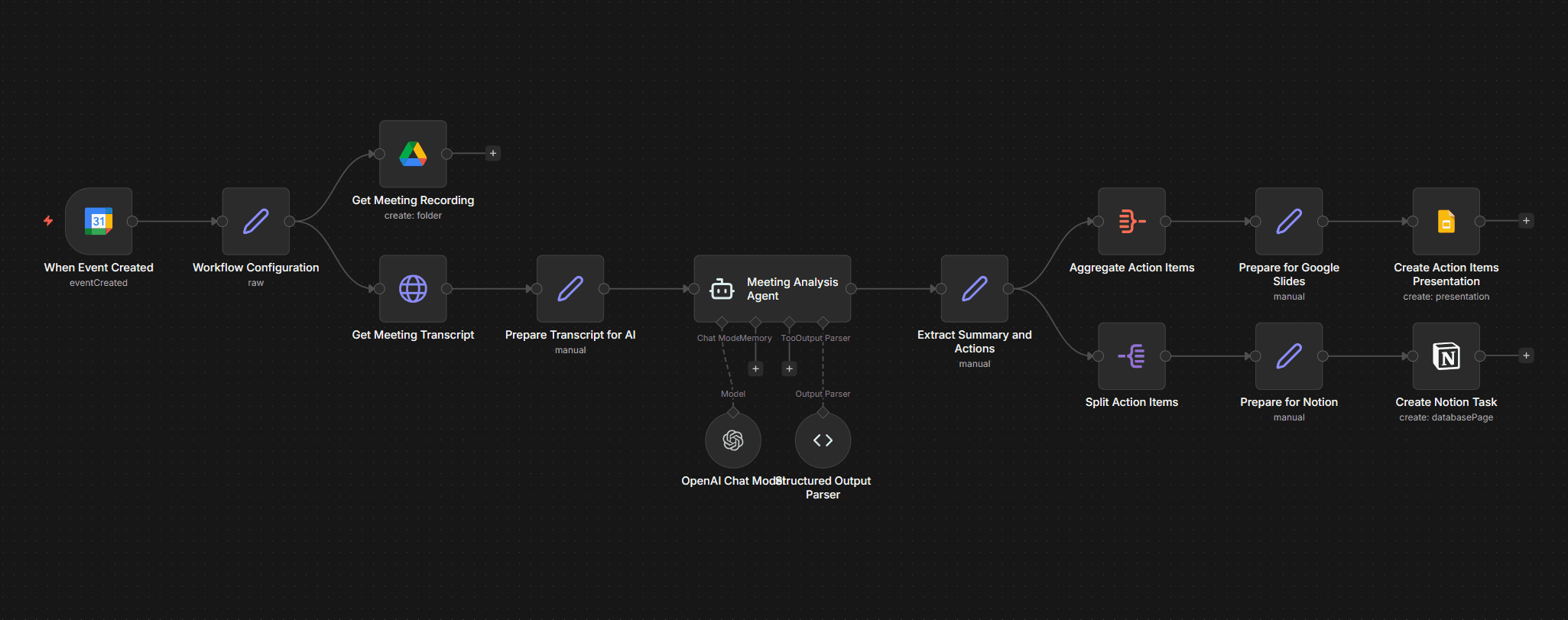
Today, my automated workflow can generate instant meeting summaries, produce full transcriptions, and automatically create tickets in Notion with clear action points. Those same action points are also structured into a Google Slides presentation for tracking and future sharing. It’s a small but tangible example of what an agent-driven workflow can look like in practice.
This is just an early skeleton of a broader vision: a more agentic system that not only identifies action points, but gathers relevant data, connects related insights, and collects opportunities into a living file.
As a UX manager today (but previously a UI/UI % multimedia designer) I find it fascinating that much of this transformation happens in invisible layers. The “interface” is no longer always the star. Workflows are shifting rapidly, and while human judgment and interpretation remain essential, the heavy visual craft is moving earlier into discovery and ideation rather than living at the centre of operational processes.